
Why Timing Your Salt Lake City Move Actually Matters
The best time to move to Salt Lake City to avoid inversion season is late spring through early fall. March through May and September through October are your sweet spots. If you have flexibility in your move date, those windows give you clean air, manageable temperatures, and a crew that can work efficiently without battling the valley’s worst weather. Here’s why that timing matters more in Salt Lake City than almost anywhere else in the country.
What Is Inversion Season in Salt Lake City?
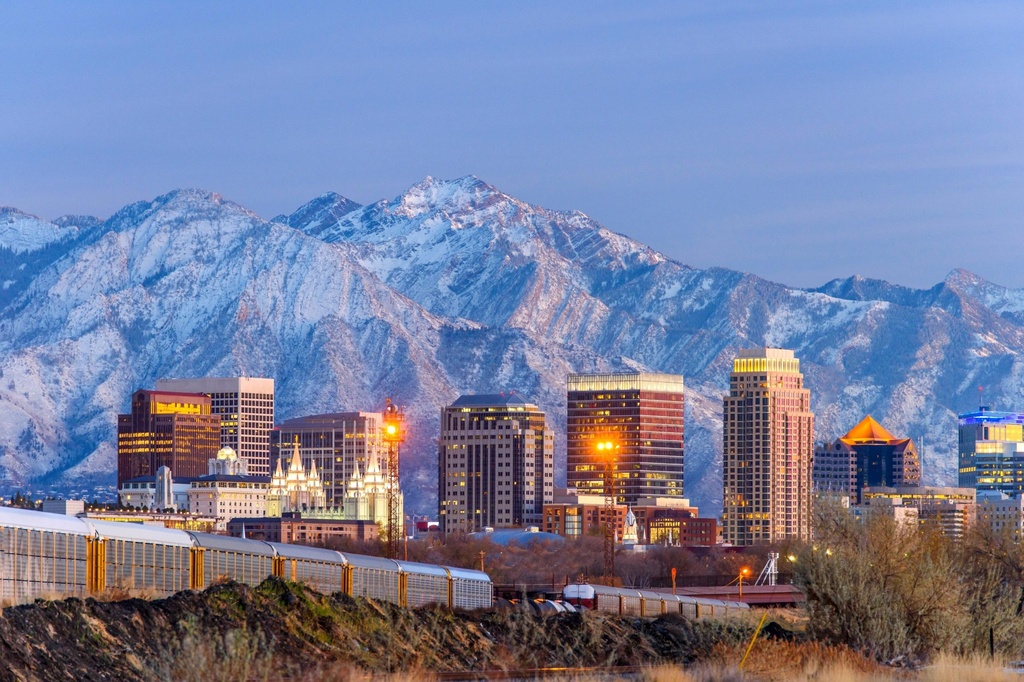
Salt Lake City sits in a bowl. The Wasatch Mountains rise to the east, the Oquirrh Mountains to the west, and the valley floor sits at roughly 4,300 feet above sea level. That geography is stunning. It is also the reason SLC deals with one of the most significant air quality challenges in the western United States every winter.
An inversion happens when a layer of warm air settles above the cold air sitting in the valley. Under normal conditions, warm air rises and carries pollution up and away. During an inversion, that process reverses. The warm air acts like a lid, trapping cold air and everything in it, including vehicle exhaust, wood smoke, and industrial emissions, right at the surface where people breathe.
Inversion season typically runs from November through March, with January and February being the most intense months. A typical Salt Lake winter sees around five to six multi-day inversion episodes, with roughly 18 days where fine particulate pollution exceeds federal air quality standards. On the worst days, the mountains disappear entirely behind a thick brown haze and the air quality index hits levels that health authorities classify as unhealthy for everyone, not just sensitive groups.
What Inversion Season Actually Means on Moving Day
Moving day is already one of the most physically demanding days of the year. Add 4,300 feet of elevation and heavily polluted winter air, and the challenge becomes significantly greater.
At altitude, your body works harder with less oxygen. Fatigue sets in faster. Dehydration happens more quickly than most people expect. During an inversion, those physical demands combine with air that can irritate your lungs, trigger respiratory issues, and make sustained outdoor exertion genuinely uncomfortable, even for people who consider themselves healthy.
For families with young children, elderly parents, or anyone with asthma or respiratory sensitivities, moving during a bad inversion day is not just unpleasant. It carries real health risks. The Utah Division of Air Quality recommends limiting outdoor physical activity on red and purple air quality days. Moving a household is about as far from limited physical activity as you can get.
Our Salt Lake City local moving team works in these conditions year-round. Every mover is a W-2 employee, fully trained and certified in-house. A professional crew handles the heavy lifting and keeps your time outdoors to a minimum, which matters on days when the air quality index is pushing into the red.
The Best and Worst Months to Move in Salt Lake City
Here is a straightforward breakdown of what to expect by season:
Best months to move: Late March through May and September through October. Inversion season has cleared or hasn’t started yet, temperatures are mild, and the air quality is consistently good. These are the windows where your move day is most likely to go smoothly from start to finish.
Manageable but busy: June through August. The air is clean and inversion is not a concern, but summer is peak moving season across Salt Lake City. Demand is high, availability fills up fast, and pricing reflects it. Book as early as possible if you’re planning a summer move.
Worst months to move: December through February. This is the heart of inversion season. Air quality is at its worst, snow and ice create hazards on driveways, stairs, and streets, and moving day logistics get significantly more complicated. If you can avoid this window, do.
Pricing for a Salt Lake City move varies depending on your home size, move date, and the services you choose. Your You Move Me Relocation Advisor will walk you through an accurate estimate before anything is confirmed, with a flat travel fee and no hidden charges.
Tips for Moving During Inversion Season If You Have No Choice
Sometimes the move date is not yours to choose. A job start date, a lease end, or a closing date sets the timeline and you work around it. If you’re moving during inversion season, here’s how to make the best of it:
- Check the Air Quality Index daily at airnow.gov in the week leading up to your move. If you have any flexibility at all, even a few days, use it to shift away from the worst air days.
- Keep windows and doors closed as much as possible during loading and unloading to limit pollutants entering your new home.
- Hydrate heavily. Dry winter air at altitude accelerates dehydration faster than most people expect.
- If anyone in your household has asthma, respiratory sensitivities, or heart conditions, talk to their doctor before moving day.
- Book professional movers so your family is not doing the heavy outdoor lifting. The less time you spend outside hauling furniture in poor air, the better.
Our packing services can also reduce the overall time your home is open to outside air during the move. When everything is packed and staged before the crew arrives, loading happens faster and your doors stay open for less time.
Ready to Plan Your Salt Lake City Move?
You Move Me Salt Lake City helps families and individuals move across the Wasatch Front every season. Whether you’re planning ahead to hit the perfect window or working with a fixed date during inversion season, our team builds a plan around your situation.
Call us today at (801) 877-0662 or 1-800-926-3900 for a same-day estimate.
Prefer to start online? Request your free estimate.